Tbilisi
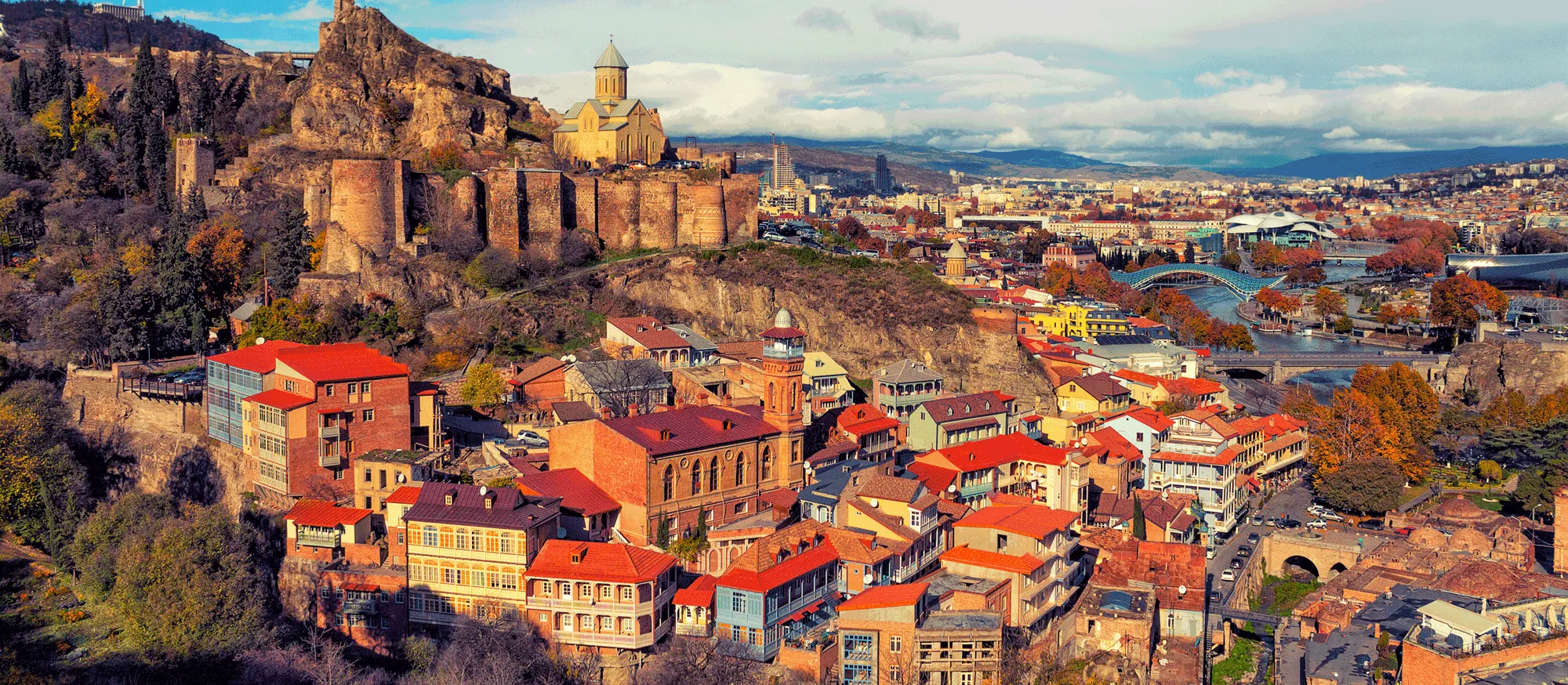
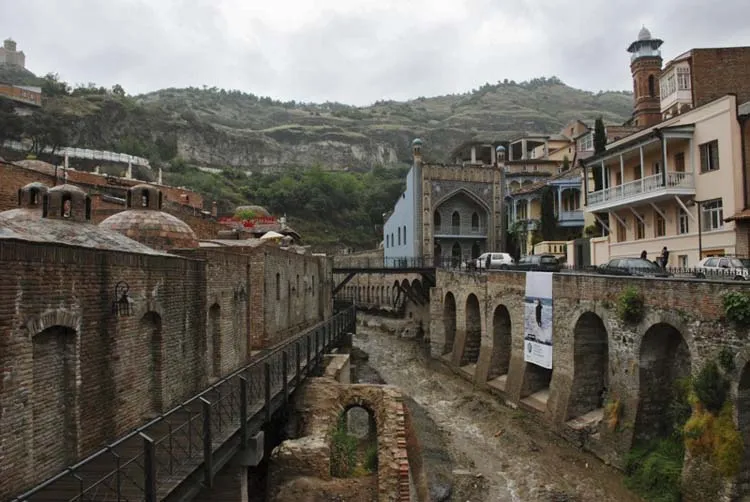
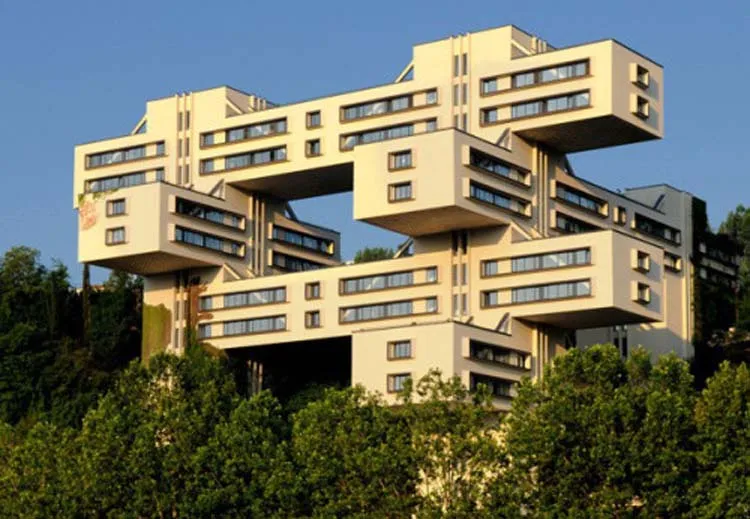
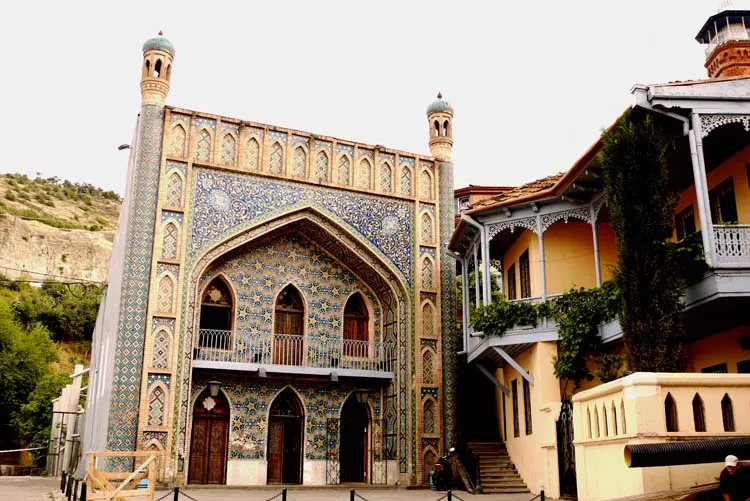
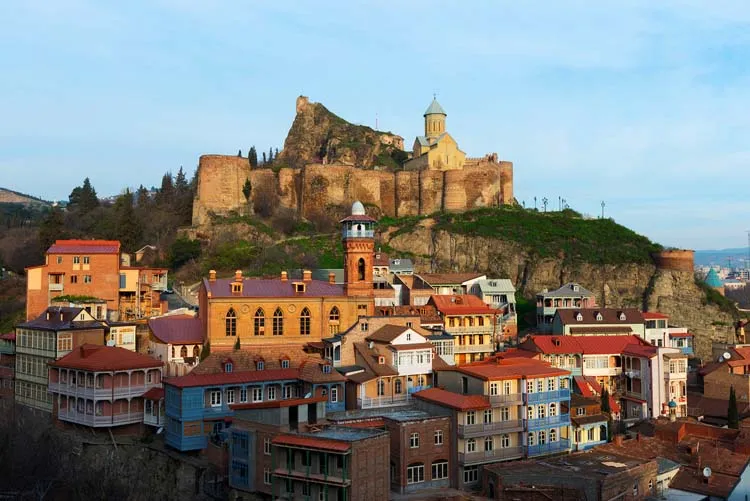
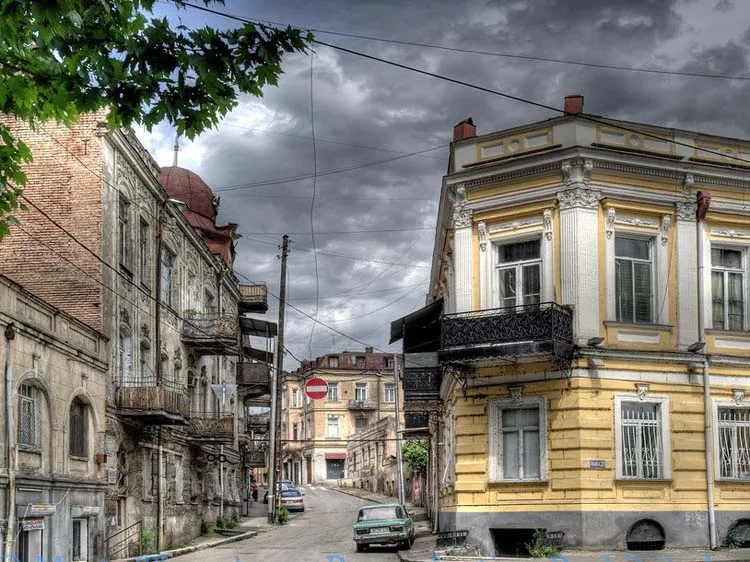
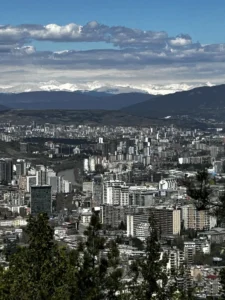
Tbilisi commonly known by its former name Tiflis, and often mispronounced as Tiblisi, is the capital and the largest city of Georgia, lying on the banks of the Mtkvari River at the altitude of 400m above sea level with a population of roughly 1.5 million.
It was founded by King Vakhtang Gorgasali in the fifth century, and continues to be the most important political and cultural center of the country.
Located on the crossroads of Europe and Asia, Tbilisi’s proximity to lucrative east-west trade routes often made the city a point of contention between various rival empires throughout history and the city’s location to this day ensures its position as an important transit route for global energy and trade projects. Tbilisi’s varied history is reflected in its architecture, which is a mix of medieval, classical, Middle Eastern, Art Nouveau, Stalinist and Modernist structures.
One widely accepted variant of the legend of Tbilisi’s founding states that King Vakhtang I Gorgasali of Georgia went hunting in the heavily wooded region with a falcon. The King’s falcon allegedly caught or injured a pheasant during the hunt, after which both birds fell into a nearby hot spring and died from burns. King Vakhtang became so impressed with the hot springs that he decided to cut down the forest and build a city on the location. The name Tbilisi derives from Old Georgian T’pilisi, and further from T’pili. The name “T’pili” or “T’pilisi” (literally, “warm location”) was therefore given to the city because of the area’s numerous sulphuric hot springs that came out of the ground.
In fact the real story of the city is different. The fact that here was founded first a fortress and after a town was determined by its strategic location and landscape – narrow gorge of Mtkvari River surrounded by rocky hills. Contrary to the former capital of Georgia, Mtskheta, which is situated on a wider and open terrain and was more difficult to protect. So, better protection due to its landscape, made Tbilisi a town and afterwards the capital of Georgia.
Archeological excavations prove that in place of Tbilisi, settlements existed back in the Bronze Age. Tbilisi as a fortress dates back to the 4th century A.D. After King Vakhtang made it a capital the fortress was expanded and the town started growing.
In the beginning of the 7th century, for the first time, Tbilisi turned under the ruling of the Byzantine Empire. Since then it was ruined and rebuilt 40 times in total. The longest ruling in Tbilisi was by Arabs from the 7th to 12th centuries.
After the collapse of the Byzantine Empire, Tbilisi was not on the Silk Road any more. In the 18th century Persians for the last time invaded the capital and this was the hardest times in history of town. In the 19th century Tbilisi was ruled by King’s Russia.
Architecture
Architecture in the city is a mixture of local (Georgian) and Byzantine, Neoclassical, Art Nouveau, Beaux-Arts, Middle Eastern, and Soviet Stalinist architectural styles. The oldest parts of town, including the Abanot-Ubani, Avlabari, and to a certain extent the Sololaki districts clearly have a traditional Georgian architectural look with Near Eastern influences. The areas of downtown Tbilisi which were built or expanded mainly in the 19th century (Rustaveli Avenue, Vera district, etc.) have a chiefly Western European look, but they nevertheless contain individual examples of European pseudo-Moorish architecture, such as the Tbilisi Opera.
Narikala Fortress
The initial fortress inside the gates was ruined after an explosion in 1827. The current church was built in 20th century as a replica of Metekhi Church
View on mapMetekhi Bridge
The first bridge in town was built in place of Metekhi Bridge. The story connected with this bridge is pretty tragic: in 13th century when the city was devastated by Jalal ed Din, on this bridge a christian icon was placed and the city population was requested to walk over the icon and renounce Сhristianity. Historians assume that approximately 100 000 inhabitants were decapitated and thrown into Mtkvari River after refusing to fulfill the request of invaders.
View on map
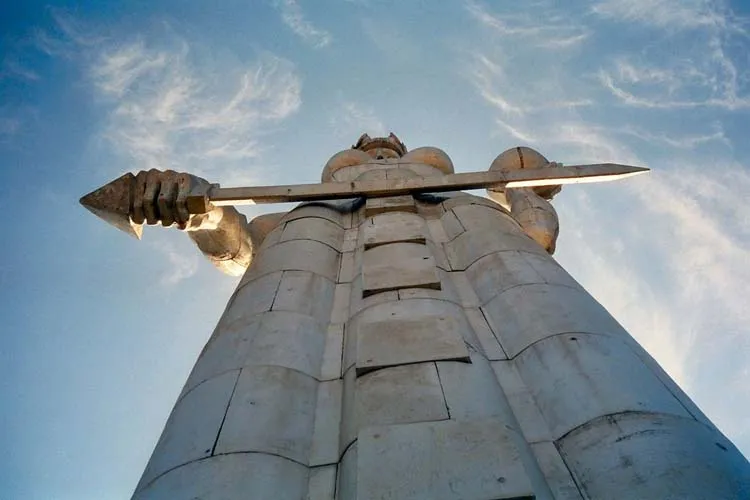
Mother of Georgia (Kartlis Deda)
A statue of a woman holding sword in one hand and wine vessel in another was built in soviet times and symbolizes Georgian mother’s readiness to welcome guests (with wine) and fight the enemies (with sword)
Metekhi Church
The church was built in the second half of 13th century. Before its current state there was a small church which was destroyed by Mongols in 1235. Although it was damaged by invaders many times, Metekhi church maintained its initial state. It was thoroughly renovated in 17-18 centuries. It is worth mentioning that during Russian rule in the church yard a jail was situated for revolutionary prisoners and even Stalin has spent some time in that jail. During soviet times Metekhi church served as a theatre.
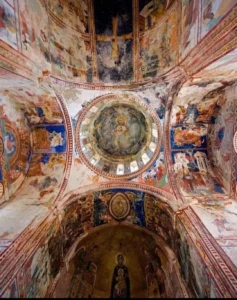
The structure of the church is cross domed which was standard architecture for Georgian churches in the Middle ages.
In general this is how church architecture developed in Georgia: in the 5-6th centuries basilicas and three nave basilicas were built. In 6-7th centuries cross domed churches took over and since 11 – 12th centuries bigger, also cross domed, cathedrals.
View on mapAbanotubani (Bath District)
Here you will find hot springs which defined the name and reason why Tbilisi was founded.
The sulphur water here is constantly 47 degrees and everyday approximately 3 million liters are surfaced. The domed bathhouses were built in 17-18 centuries. Tbilisi bathhouses were famous for centuries. Many famous people and writers have visited and mentioned them. Still very popular among tourists and locals alike.
Caravan Ssaray & Sioni Cathedral
Caravan Saray was a place where merchants stayed and kept their merchandise. It was built in 1650. In 1890 it became a museum and a venue for events and restaurants.
Adjacent Sioni Cathedral was built in 6 – 7 centuries but also has been damaged and renovated many times. The icons belong to the 19th century. This church keeps 2 main holy relics: the vine cross of St. Nino and the skull of St. Toma (one of Christ’s disciples).
Anchiskhati Church
Is the oldest church (6th century) in Tbilisi and the best example of ancient architecture as a three naved basilica
Rustaveli Avenue
Rustaveli is the main street of Tbilisi. Shota Rustaveli after whom the street is named is famous and most favorite Georgian poet, author of a poem “Knight in Tiger’s Skin”. The street stretches from Freedom square (square with tall, golden Saint George statue) to Metro Station Rustaveli. Here you should pay attention to the parliament building, N1 school, Rustaveli Theatre, Opera house.
View on mapSameba Cathedral
It is the tallest cathedral in Georgia, was built in 2004 and is currently the most important church in the country.
View on mapMuseums
More places to visit
– The Bridge of Peace and Rike Park in the old town
– River tours on Mtkvari (from Rike Park)
– Aghmashenebeli district and Aghmashenebeli Avenue with its pedestrian area.
– Tbilisi Botanical Garden (great location for short treks and trips to nature)
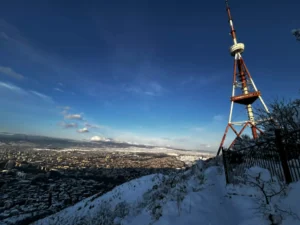
– Mtatsminda hill with a cable car going to the top up to the TV station and big Ferris wheel.
More Things to do
– Cross the Bridge of peace
– Climb Narikala fortress
– Visit Sameba Holy Trinity Cathedral
– Visit Mtatsminda Park with a funicular
– Take a picture next to the Mother of Georgia statute
– Spend a day in Botanical Garden
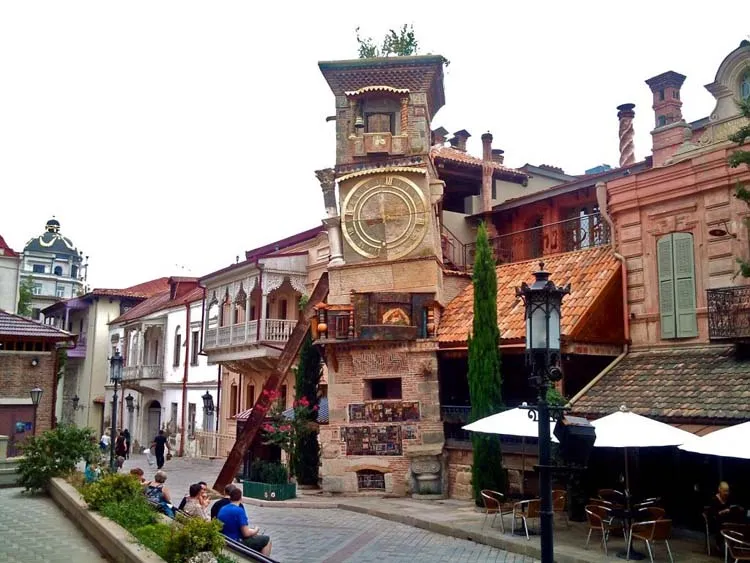
– Visit the Opera Theater, Rustaveli theatre and Gabriadze Marionette theatre
– Get something to eat at Erekle II Street
– Taste lots of wines
– Wander the streets of old Tbilisi: Vera, Mtatsminda, Sololaki, and Aghmashenebeli
– Shop for antique and interesting stuff at the Dry bridge market
– Have a swim in Tbilisi Sea
– Take a boat tour on the Mtkvari River
– Jog, cycle and relax at Turtle Lake or Lisi Lake
– Absolutely go and get a massage at Sulphur baths
– Go for a pub crawl
– Go clubbing to Bassiani
View on mapSend us your request
Related Articles